
Understanding Property Ownership Options for Foreigners in Koh Samui
Buying Property In Koh Samui – Foreign property ownership in Thailand operates under strict legal frameworks that determine how you can hold real estate in Koh Samui. Three pathways exist for securing property rights, each with distinct legal structures, costs, and long-term implications.
Freehold Condominium Ownership
The Condominium Act allows you to acquire freehold ownership of condominium units with full perpetual rights in Koh Samui. This is the most secure form of direct property ownership for foreign nationals in Thailand. Foreign ownership cannot exceed 49% of the total sellable area within any condominium building. The remaining 51% stays in Thai hands. This creates a quota system that can limit availability in popular developments.
You must transfer funds from abroad in foreign currency to qualify for this ownership type. Banks issue a Foreign Exchange Transaction Form for amounts over $50,000 USD. You’ll present this during registration at the Land Office. This documentation proves the source of funds and remains necessary for future property transactions or fund repatriation.
Freehold condominium ownership gives you mortgage eligibility, full transfer rights, and inheritance capability. Financial institutions accept these properties as collateral more than other ownership structures. The perpetual nature of ownership means no renewal negotiations or term limitations affect your rights.
Leasehold Ownership Structure
Leasehold arrangements grant you the right to use land or property for a fixed period. The maximum statutory lease term stands at 30 years under Thai law. Leases over three years must be registered at the Land Office to establish enforceability.
The “30+30+30” structure does not create guaranteed legal rights despite common marketing claims. This supposedly gives 90 years but only the first registered 30-year term receives statutory protection. Renewal beyond the first period relies on contractual cooperation and requires future registration. The Thai Supreme Court has ruled that pre-agreed automatic renewals are void because they unlawfully circumvent the 30-year cap.
Renewal clauses work as personal contractual promises between the original parties. These provisions do not bind subsequent landowners who purchase the property during your lease term. The new owner faces no legal obligation to honor renewal terms agreed with the previous owner if the landowner sells.
Mortgage availability for leasehold properties remains limited. Lenders recognize the time-restricted nature and uncertain renewal prospects. Resale value declines as the remaining lease term shortens. This affects your exit strategy and investment returns.
Thai Limited Company Ownership
A Thai Limited Company can hold land freehold. Foreigners can own up to 49% of shares while Thai nationals hold at least 51%. This structure requires full compliance with corporate and foreign business regulations. The company must operate as a legitimate profit-making business, not just as a property holding vehicle.
Nominee arrangements where Thai shareholders act as placeholders are illegal under Thai law. Authorities investigate companies suspected of using nominee structures. Violations carry severe penalties including property forfeiture and criminal charges. Thai shareholders must have genuine financial or business interest in the company.
Annual compliance costs range from 20,000 to 30,000 THB for accounting and tax filings. You’ll need proper financial records, shareholder meetings, and tax submissions to maintain legal status. Legal safeguards such as enhanced voting rights for foreign shares can provide control despite minority shareholding.
Comparing the Three Ownership Methods
Each ownership pathway serves different investment horizons and risk tolerances. Freehold condominium ownership offers perpetual tenure with no renewal uncertainty, stronger financing options, and straightforward inheritance planning. Availability depends on the 49% foreign quota in specific buildings.
Leasehold provides lower costs and simpler setup procedures but introduces time limitations and renewal risks. This option suits medium-term investment horizons of 10 to 20 years where capital flexibility takes priority over permanent ownership.
The company structure enables indefinite land ownership and potential tax benefits but demands higher setup costs, ongoing compliance obligations, and careful legal structuring to avoid nominee violations. Pricing should reflect tenure limitations in leasehold arrangements. Company and freehold structures command premium valuations for their permanence.
Your choice depends on investment objectives, succession planning needs, and capital allocation strategy. Long-term capital preservation usually works better with freehold condominium ownership for its legal certainty. Leasehold may prove viable when priced and structured for shorter holding periods.
Types of Samui Property Available for Foreign Buyers
Koh Samui’s real estate inventory spans three distinct property categories. Each suits different budgets and lifestyle priorities. Your choice among villas, condominiums, or raw land shapes not only your ownership structure but also your ongoing costs, rental potential, and development flexibility.
Villas and Houses For Sale In Koh Samui
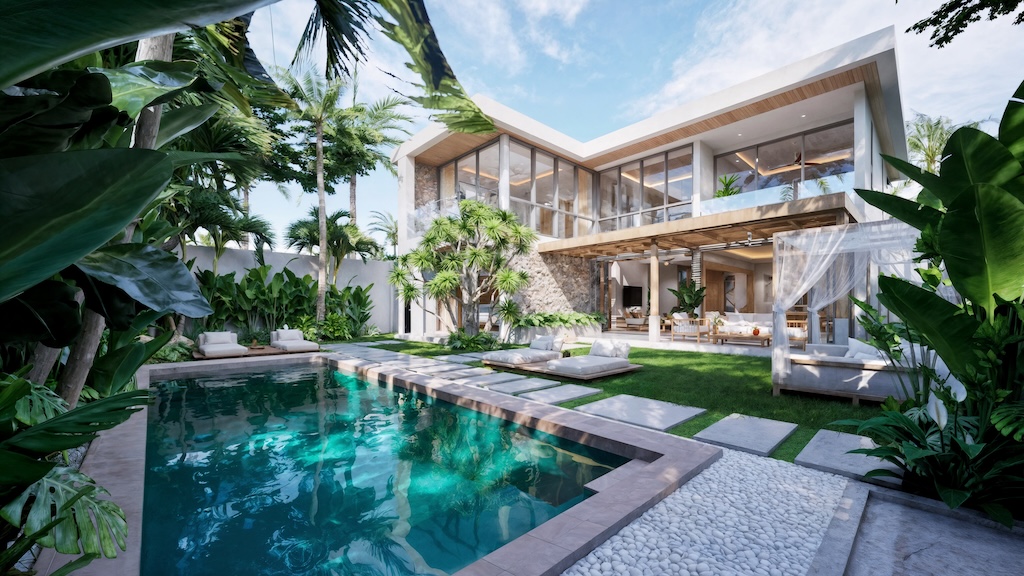
Villas represent the premium segment of Samui property and offer privacy and customization that condominium living cannot match. Entry-level garden-view villas with pools start at 5 to 6 million THB. Properties with elevated views or proximity to beaches command substantially higher valuations. Sea-view villas begin around 12 to 14 million THB. This reflects the island’s limited coastal geography and high demand for ocean vistas.
Beachfront villas form the apex of the market. Direct beach access properties start from 40 to 50 million THB. These premium listings occupy coastal land that grows scarcer each year and drives valuations upward. The most sought-after properties feature three or more bedrooms with sea views in the northeastern part of the island. Prices range between 12 to 40 million THB ++.
Property sizes vary across the villa segment. Compact two-bedroom houses occupy around 130 square meters. Luxury estates extend beyond 635 square meters of living space. Most villas include private swimming pools, multiple bathrooms, and outdoor living areas suited to tropical climate.
Foreign buyers access villa ownership through 30-year leasehold agreements or Thai Limited Company structures. Direct land ownership remains prohibited. Leasehold villas often separate land tenure from building ownership. This allows you to own the structure while leasing the underlying plot. Company-held properties sometimes transfer with the existing corporate entity. This simplifies ownership transfer and maintains freehold land rights. To view villas for sale in Koh Samui click here
Condominiums and Apartments For Sale In Koh Samui
Condominiums provide the most straightforward path for foreign property acquisition in Koh Samui. The difference between apartments and condominiums hinges on shared facilities. Apartments function as standalone units within buildings. Condominiums include rights to use common amenities such as swimming pools, fitness centers, and recreational rooms.
Building regulations and zoning laws limit high-rise construction on the island. This results in fewer large-scale condominium developments compared to Bangkok or Phuket. Supply constraint maintains pricing stability and can create waiting lists for units in sought-after projects.
Studio units around 30 square meters start from 1.8 million THB. One-bedroom units ranging from 50 to 70 square meters represent the most popular size category. They balance affordability with livable space. Two-bedroom condominiums span 75 to 145 square meters with pricing from 7 to 18 million THB depending on location and sea views. Luxury three-bedroom penthouses in beachfront developments can exceed 23 million THB.
Foreign ownership through direct freehold title commands premium pricing compared to leasehold or Thai quota units. This price differential reflects the legal certainty and perpetual tenure that freehold ownership provides. You should verify the current foreign quota status before committing to any condominium purchase. Buildings at the 49% threshold cannot accommodate additional foreign freehold registrations.
Land Plots for Development
Raw land parcels offer the greatest design freedom but require navigating zoning regulations and development approvals. Plot sizes range from compact 224 square meter parcels suitable for private villas to expansive estates exceeding 20,000 square meters intended for resort or multi-unit developments.
Entry-level hillside and garden-view plots start from 1,500,000 THB for smaller parcels. Mid-range land with partial sea views prices between 4 to 12 million THB for 400 to 2,400 square meter plots. Premium sea-view and beachfront land commands 15 to 65 million THB or more in established areas like Bophut, Maenam, and Chaweng Noi.
Koh Samui operates under zoning regulations that designate specific land uses. Some zones permit only agricultural use. Others allow villa construction but prohibit hotels. Certain areas accommodate resort developments. These restrictions prevent overdevelopment while maintaining the island’s character. You must verify zoning classification before purchasing land. This ensures your intended use lines up with permitted activities.
Most land listings feature Chanote titles or Nor Sor 3 Gor titles. Both provide defensible boundaries and ownership claims. Infrastructure readiness varies. Some plots offer concrete road access and utility connections. Others require development investment to achieve build-ability. To view land plot for sale in Koh Samui click here.
Legal Requirements and Documentation for Buying Property in Koh Samui
A property purchase in Koh Samui means you must navigate Thailand’s land registration system and understand the documentation that confirms your investment. The legal framework distinguishes between multiple title types, imposes specific transfer costs, and demands verification procedures that protect buyers from fraudulent transactions.
Land Title Deed Types in Thailand
The Chanote, known as Nor Sor 4 Jor, provides full freehold ownership rights with surveyed boundaries marked by GPS coordinates. This title grants complete legal authority to sell, lease, mortgage, or transfer the property. Properties with Chanote titles command premium valuations owing to their legal certainty and are the preferred option when you buy property in Koh Samui.
Nor Sor 3 Gor represents land awaiting full title conversion, with boundaries measured by the Land Department. You can execute the same legal transactions as with Chanote titles, including sales, leases, and mortgages. Owners may petition the Land Department to upgrade this title to Chanote status if no opposition arises.
Nor Sor 3 titles lack precise Land Department measurements. This creates boundary ambiguities that can trigger disputes with adjacent landowners. Title upgrades follow a progression from Nor Sor 3 to Nor Sor 3 Gor, then to Chanote through applications at the local land office. Lower-tier titles such as possessory rights receive tax recognition but cannot support registered leases, usufructs, or mortgages.
Transfer Fees and Taxes
Property transfers generate four distinct government charges calculated on either the official appraised value or actual sale price, whichever exceeds the other. The transfer fee equals 2% of the assessed value. Buyers and sellers split this cost equally in most cases, though Sale and Purchase Agreements can stipulate alternative arrangements.
Specific Business Tax at 3.3% applies when sellers owned the property less than five years. Stamp duty at 0.5% applies to properties held five years or longer as an alternative. Withholding tax rates vary: companies pay 1% while individuals face progressive rates from 5% to 35% based on assessed value and ownership duration.
Recent government stimulus measures reduced transfer fees to 0.01% on properties under 3 million THB and 1% on properties valued between 3 to 10 million THB through December 2026. These reductions exclude foreign buyers in most cases, who must budget using standard rates.
Due Diligence Process
Title searches trace ownership history to the date of original acquisition and reveal mortgages, liens, or encumbrances that could compromise your purchase. Verification confirms the seller holds legal authority to transfer the property and identifies any restrictions on zoning, access rights, or building permits.
New developments require extended due diligence to confirm developer permits, Environmental Impact Assessments filed with provincial authorities, and compliance with condominium rules & regulations. Court record searches identify whether sellers face litigation that might affect property rights.
Physical inspections verify that constructed buildings match approved permits and that properties connect to public roads either directly or through registered servitudes. You must assess water and electricity availability, drainage capacity, and sewage disposal systems before purchase.
Working with a Thai Lawyer
Thai property lawyers conduct title searches, perform due diligence, and review Sale and Purchase Agreements to identify unfair clauses before you sign. They verify foreign currency remittance documentation on condominium purchases and prepare transfer documents to Land Office registration.
Legal fees cost often less than 200,000 THB to complete services from due diligence through ownership transfer. Lawyers help with the final transfer at the Land Office and make sure all documentation meets regulatory requirements. Samui property transactions demand legal representation before you pay any deposit to protect you from contractual pitfalls and regulatory violations.
Choosing the Right Location in Koh Samui
Location determines your property’s appreciation prospects, rental performance, and daily lifestyle experience in ways that ownership structure and property type cannot. Koh Samui’s geography creates distinct micro-markets. Each offers different proximity to beaches, infrastructure development levels, and tourist activity patterns.
Northeast Coast Areas (Chaweng, Bophut, Plai Laem)
Chaweng dominates the northeastern coast with the island’s longest beach stretching 7 kilometers. Central Festival Samui anchors the area with over 200 retail outlets, international brands and entertainment venues. Bangkok Hospital Samui, Tesco Lotus and multiple international schools position Chaweng as the island’s commercial center. High rental demand stems from consistent tourist footfall and supports occupancy rates that justify premium property valuations. Properties here serve short-term vacation rentals very well, though the vibrant nightlife and beach crowds reduce privacy compared to quieter zones.
Bophut blends traditional charm with modern conveniences through its preserved Fisherman’s Village, where Chinese style shophouses transformed into boutique restaurants and upscale bars. The Wharf Samui lifestyle mall spans over 5,000 square meters with more than 100 shops and eateries. This area attracts families and retirees who seek authenticity without sacrificing amenities. Recent developments include Anava Samui condominium starting from 3.6 million THB and Level Residence Villas from 7.3 million THB.
Plai Laem occupies the northeastern tip with the Wat Plai Laem Temple featuring an 18-armed Guanyin statue. Properties here command premium pricing for their exclusivity and cultural proximity. The area appeals to high-net-worth individuals who seek privacy while maintaining access to Central Festival Samui within 15 minutes.
North and West Coast Options
Maenam offers quieter beaches with property prices averaging 12.7 million THB. The weekly walking street market and Santiburi golf course improve livability without tourist congestion. Bang Por presents great options with properties averaging 16.8 million THB. Lipa Noi faces westward and delivers sunset views with family-friendly shallow waters ideal for children.
Taling Ngam on the southwest coast targets luxury buyers with median property prices reaching 48.4 million THB. The planned 12.1 billion baht Koh Samui Cruise Terminal here will accommodate 120 cruise ships by 2032.
Beachfront vs Hill Properties
Beachfront properties provide immediate ocean access and ground-level convenience suited to families and those with mobility considerations. All Thai beaches remain public by law, meaning vendors and passersby can access sand fronting your property. Beachfront villas start around 40 million THB.
Hillside properties deliver panoramic vistas and better privacy at lower acquisition costs. Sea-view villas often achieve higher net rental yields due to reduced purchase prices despite strong occupancy demand. But steep access roads require suitable vehicles or driver services.
Proximity to Amenities and Services
Airport proximity benefits Bangrak and Choeng Mon and reduces travel time for guests and residents. Distance from Central Festival Samui, Bangkok Hospital and international schools affects property valuations and rental appeal. Properties within walking distance to beaches, restaurants and shopping command premiums over those that need vehicle transportation for daily activities.
The Step-by-Step Property Buying Process
A property purchase in Koh Samui takes four to six weeks from the original offer to final ownership registration. This timeline covers due diligence verification, contract preparation, and government processing at the Land Office. Each phase builds on previous steps and requires careful coordination between you, the seller, your lawyer, and your real estate agent.
Initial Property Search and Selection
A real estate agent familiar with Samui property markets saves time by filtering listings that match your budget and requirements. Agents negotiate pricing on your behalf, act as liaisons with sellers, and provide local market insights that online searches cannot deliver. Agents lack legal expertise to prevent compliance issues, so their role is complementary rather than detailed.
Hire a qualified Thai property lawyer to begin assessments before you commit to any property. Early legal involvement protects you from fraudulent sellers, contractual pitfalls, and regulatory violations that could invalidate your purchase. Your lawyer verifies seller ownership history and reviews property details before you sign reservation agreements.
Reservation Agreement and Deposit
You sign a Purchase Reservation Agreement with the seller once you identify a suitable property for sale in Koh Samui. This document contains sale terms and secures the property while your lawyer completes due diligence. The standard deposit equals 5% of the agreed purchase price and is normally held by the real estate agent.
The reservation agreement provides 30 to 45 days for your lawyer to perform detailed due diligence and prepare the final Sales and Purchase Agreement. The sale does not proceed if due diligence reveals issues the seller cannot rectify, and your deposit returns in full. Some agents request larger deposits and retain portions even when due diligence fails, so look at agency contracts carefully before signing.
Legal Review and Contract Signing
The Sales and Purchase Agreement finalizes all transaction terms, including payment schedules, transfer dates, and responsibility for fees and taxes. Sellers draft this contract, so independent legal review is non-negotiable. Your lawyer confirms terms line up with your interests, identifies unfair clauses favoring the seller, and ensures compliance with Thai property regulations.
The SPA structures four to eight staged payments tied to construction milestones for off-plan properties, with ownership transferring after the final payment.
Final Transfer at the Land Office
Both you and the seller may attend the Land Office in person for the ownership transfer, or authorize representatives through Power of Attorney. Your lawyer prepares required documents and helps with registration procedures. Transfer fees, withholding tax, and either specific business tax or stamp duty become due at this appointment and are calculated on the property’s assessed value.
The Land Office updates the title deed with your name after successful registration and completes your acquisition of property in Koh Samui.
Investment Considerations and Rental Income Potential
Rental income generation turns property ownership in Koh Samui from lifestyle acquisition into productive investment. Your financial returns depend on rental strategy selection, management quality, and location-specific patterns of what renters want.
Holiday Rental Market on Koh Samui
Short-term vacation rentals capture premium nightly rates during peak tourist seasons. The island maintains 5,800 holiday rental properties with average daily rates of THB 13,700 and occupancy rates of 55% each year. Three-bedroom villas average THB 4,927 to THB 5,101 in revenue per available room depending on location. Peak season occupancy reaches 70% to 90%. Low season drops to 30% to 40%. Booking lead times average 61 days, with December reservations made 93 days in advance.
Long-Term Rental Options
Monthly leases provide stable income without frequent turnover costs. Studio apartments rent for 15,000 to 20,000 THB monthly. One-bedroom condos go for 20,000 to 30,000 THB, two-bedroom pool villas for 50,000 to 60,000 THB, and luxury sea view properties for 150,000 to 500,000+ THB. Long-term arrangements return 8% to 10% each year with lower management intensity.
Property Management Services
Professional management companies charge 30% to 40% of rental income. Services include guest check-ins, maintenance, marketing on platforms of all types, and 24-hour support. Properties that use local management report superior occupancy and rate performance compared to owner-managed listings.
Expected Returns on Investment
Well-managed sea-view villas generate gross rental yields between 6% to 12% each year. Net yields range from 5% to 8% after operating costs. Capital appreciation averages 5% to 12% per year. Combined returns reach 12% to 18% when you factor both income and asset growth.
Conclusion
For those buying property in Koh Samui must think over ownership structures, location dynamics and legal compliance. Freehold condominiums offer the strongest legal protection. Leasehold and company structures need a full picture of their limitations and obligations.
Your investment success depends on selecting properties in locations with strong rental demand and working with reputable real estate agents from the outset. Complete full due diligence before purchasing. Properties in prime areas deliver gross yields between 6% to 12% each year, with capital appreciation adding value over time.
Begin your property search by defining clear investment objectives. Partner with experienced professionals who can guide you through Thailand’s legal requirements and protect your interests throughout the transaction process.